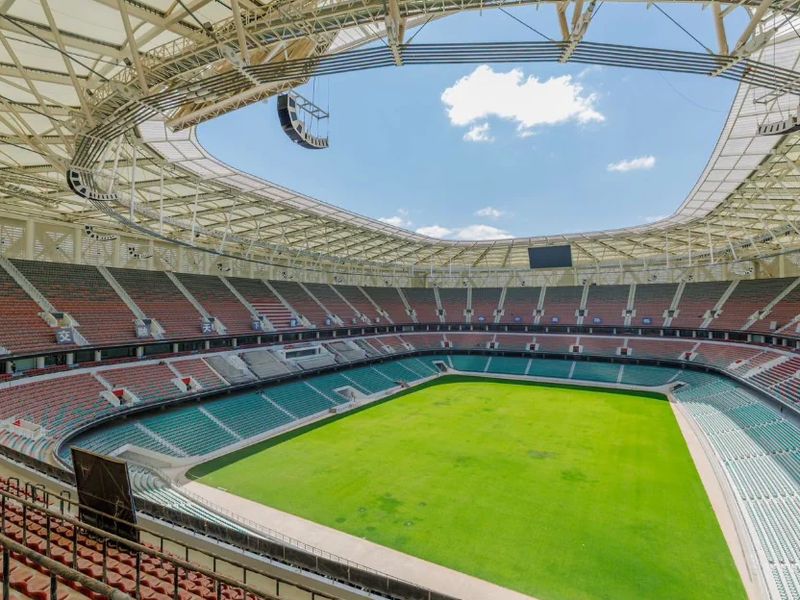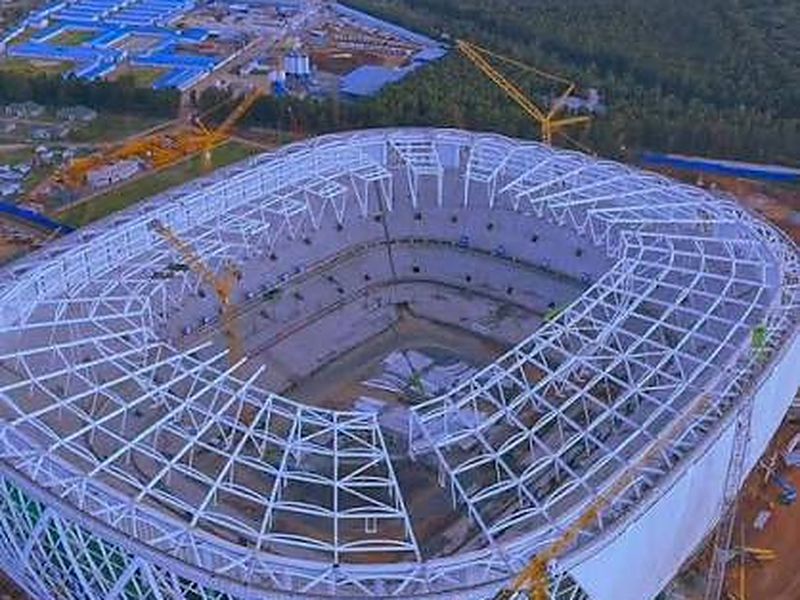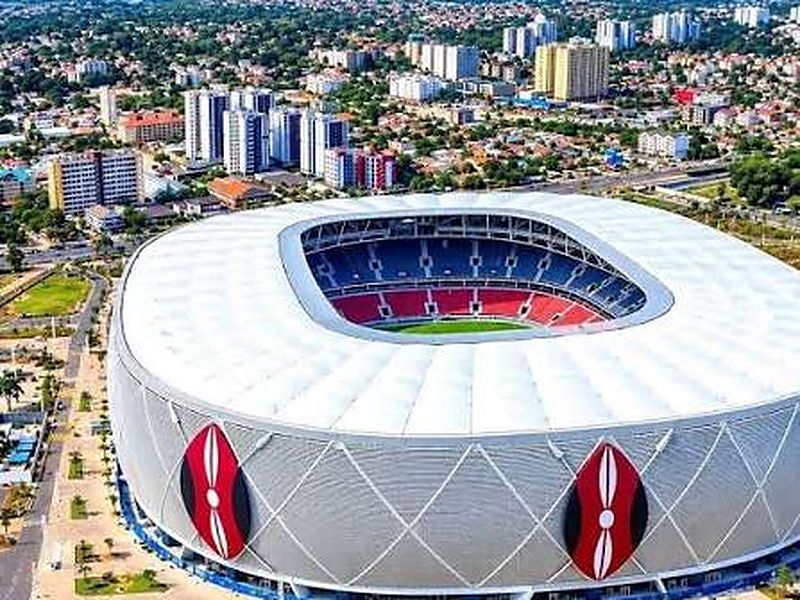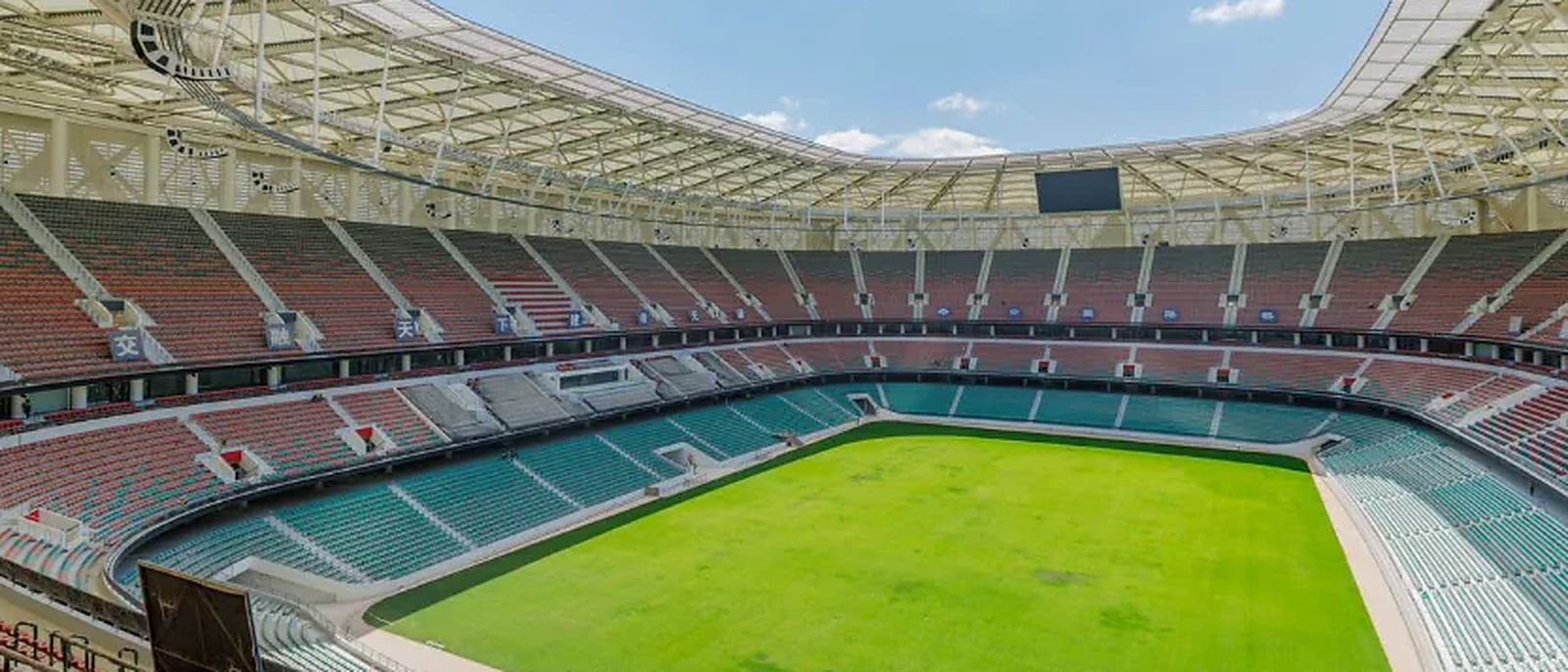
Talanta Stadium, also known as Raila Odinga International Stadium, is a new 60,000-seat stadium on Ngong Road in Nairobi, Kenya. It is built for football and rugby, and it is meant to be the centrepiece of the wider Talanta Sports City project.
Introduction to the stadium
The stadium stands at the Jamhuri Grounds, past Dagoretti Corner along Ngong Road, roughly ten kilometres west of Nairobi’s central business district. It sits close to the Polo Grounds and the Jamhuri ASK Showground, in an area also referred to as Posta Grounds.
It has two names in everyday use. “Talanta” is the project name, and Kenyans will also see it called the Raila Odinga International Stadium after a renaming that the president pledged in December 2025. This guide uses both names for the same venue.
Reports describe it as Kenya’s first purpose-built football stadium, designed to meet the Confederation of African Football’s Category 4 standards. There is no athletics track inside the bowl. Athletics fields and rugby training grounds are planned beside it instead.
Background and history
Nairobi’s two big stadiums, Moi International Sports Centre in Kasarani and Nyayo National Stadium, were both built in the 1980s. Kasarani is listed with around 60,000 seats and Nyayo with around 35,000. Both are multi-purpose venues that were built to host athletics as well as football.
Talanta was announced as the first major new sports stadium for the capital in decades. One industry database describes it as the largest investment in sports infrastructure in Kenya’s history and the first of its kind since those 1980s builds.
The need became sharper in September 2023, when CAF announced that the joint “East Africa Pamoja” bid by Kenya, Uganda and Tanzania had won the right to host the 2027 Africa Cup of Nations. The bid beat proposals from Egypt, Senegal, Botswana and Algeria. Kenya’s share of the tournament needed modern venues, and Talanta became its flagship.
Construction began in March 2024 at a groundbreaking led by President William Ruto. The work was awarded to China Road and Bridge Corporation, the company behind the Nairobi–Mombasa Standard Gauge Railway and the Nairobi Expressway. You can read the full story on the Stadium Development page.
The vision behind the stadium
Public statements describe the project as more than a single stadium. “Talanta Sports City” is the umbrella name for a complex that includes the main stadium, three training pitches, an athletics field and rugby training grounds. It was also presented as a way to host major regional events, attract sports tourism and give Kenyan football and rugby a home built to modern broadcast and safety standards.
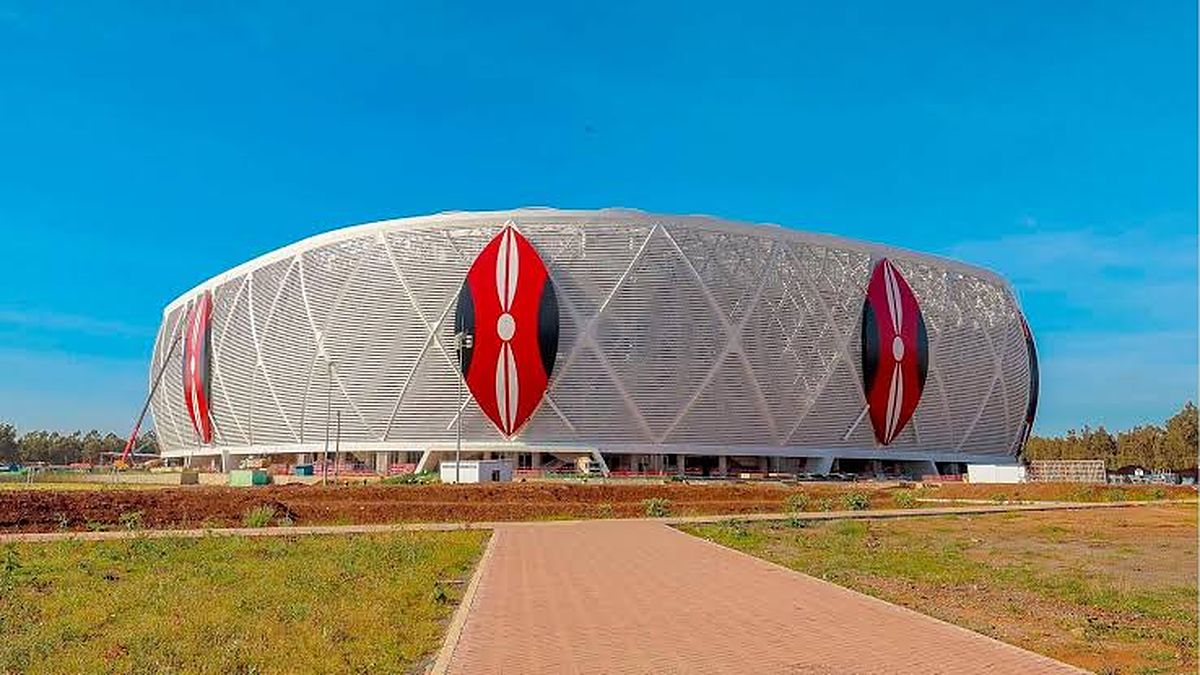
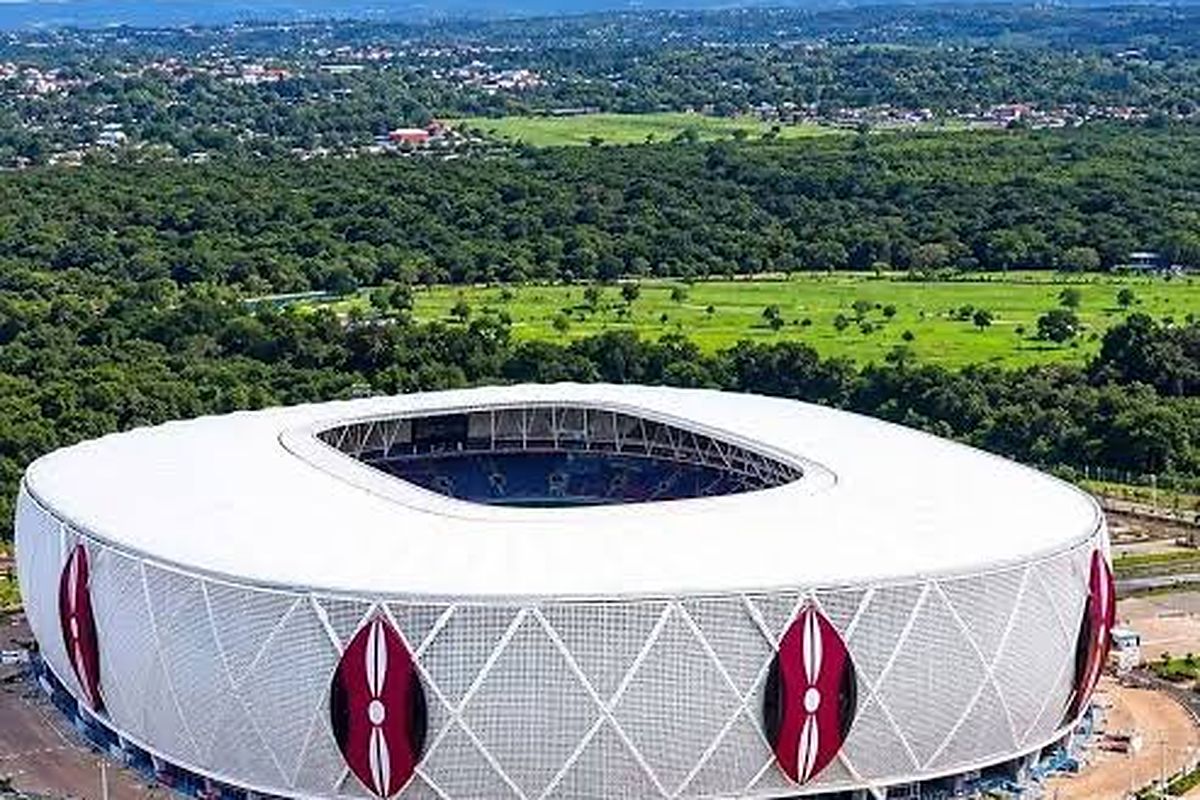
The design leans on national symbols. Eight shields and spears on the outside are derived from Kenya’s flag and emblem, and each shield marks an entrance, which helps spectators find their gate and supports quicker crowd movement and evacuation.
The name: Talanta and Raila Odinga
“Talanta” was the name used from the project’s launch, and early coverage also called it the Talanta Hela Stadium.
On 12 December 2025, during the 62nd Jamhuri Day celebrations, President Ruto promised that the government would approve renaming the stadium after the late former Prime Minister Raila Odinga. Reports at the time said the renaming involved several steps and would take effect when the stadium was completed. Government and press coverage in 2026 now routinely uses the name Raila Odinga International Stadium.
A note on names
Search engines, news sites and signage may use either name for some time. Both refer to the same stadium at Jamhuri Grounds, Nairobi.
Its significance to Kenya
For Kenyan football the stadium offers a venue designed for the sport rather than adapted to it. Without a running track, the stands are built close to the touchline, which usually improves atmosphere on television and in the stands. It also gives Kenyan rugby, including sevens and fifteens, a modern home option.
Nationally, the project is a statement about ambition. It has also drawn scrutiny: reported costs rose from an initially approved KSh 35 billion to about KSh 45.85 billion, and CAF’s March 2026 report said the venue had yet to meet the standards required for the tournament. Both points are covered in more detail on the development page, because a fair account of Talanta includes the debate as well as the design.
Its contribution to sports and entertainment
The stadium has been built primarily for football and rugby, which will form the core of its calendar. Its opening is reported to be marked by a Bayern Munich v Ajax exhibition match on 5 January 2027, and it is expected to be one of Kenya’s AFCON 2027 venues. Larger concerts and cultural events are often held in stadiums of this size, but no specific entertainment bookings have been confirmed in the sources we reviewed. The Sports & Events page separates what is confirmed from what is only possible.
National and international importance
The 2027 Africa Cup of Nations will run from 19 June to 17 July 2027 across Kenya, Uganda and Tanzania. It will be the first edition shared by three countries and the first in East Africa since Ethiopia hosted in 1976. Twenty-four national teams are due to take part. Talanta is intended to be Kenya’s flagship stadium for the event, and Interior PS Raymond Omollo has said it could host both the opening match and the final, although CAF has not confirmed the allocation.
Its future potential
Looking ahead, the stadium’s long-term value will depend on how often it is used after the 2027 tournament. A stadium of this size relies on a steady calendar of league and international football, rugby, and entertainment events. Reports say the opening is to be financed through corporate partnerships and a commercially sustainable model, and that the project’s funding is backed by future revenues, so how the venue is programmed matters well beyond one tournament.
What is still to be confirmed
- The operating model, ticketing arrangements and day-to-day programming after the opening.
- Which AFCON 2027 matches Talanta will host.
- Final specifications once CAF completes its assessments.
Sources and dates
Compiled from public reporting checked on 14 November 2026, including Wikipedia (Raila Odinga International Stadium), The Star (9 Nov 2026), K24 Digital (10 Nov 2026), Capital FM, Daily Nation and StadiumDB. See each page’s details and verify with official announcements.