The stadium has been under construction since March 2024. This page follows the project from the first announcements to the November 2026 inspection, including the cost debate.
Project background
Talanta Sports City was announced as a major national sports infrastructure project, centred on a 60,000-seat stadium on the Jamhuri Grounds. Its timing was linked to Kenya’s role in the 2027 Africa Cup of Nations, which Kenya, Uganda and Tanzania will co-host.
The project was later described as a public-private partnership (PPP) between the Government of Kenya and a third party. The state owns the stadium, and Sports Kenya is listed as its operator.
Vision and objectives
Stated aims include building a modern, football-and-rugby-only venue, hosting international events, attracting sports tourism, and creating jobs. The first public Treasury approval put the project at KSh 35 billion.
Planning and architectural development
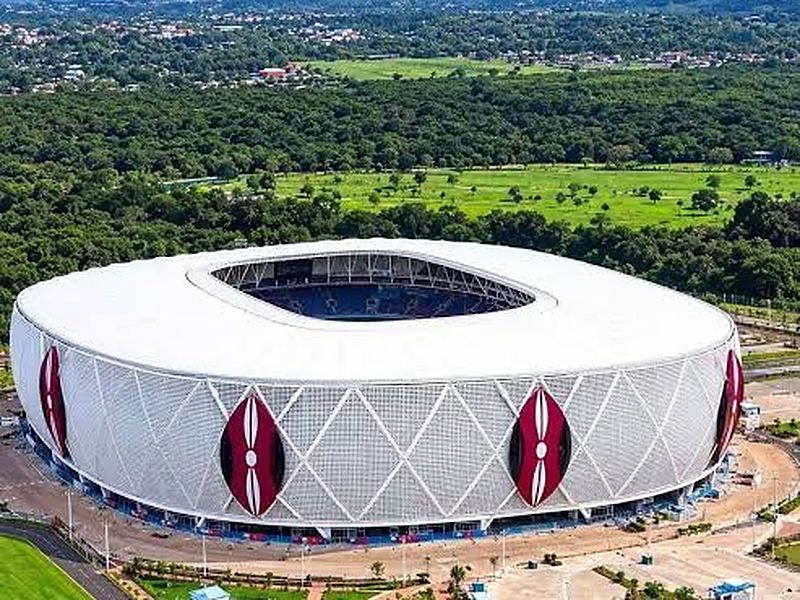
The design brief produced a bowl with a white lattice canopy and eight shield-and-spear motifs from Kenya’s flag and emblem. The project architect named in coverage is Major Victor King’e of the Ministry of Defence. Reports say a retractable cover was considered and then replaced by a fixed canopy. 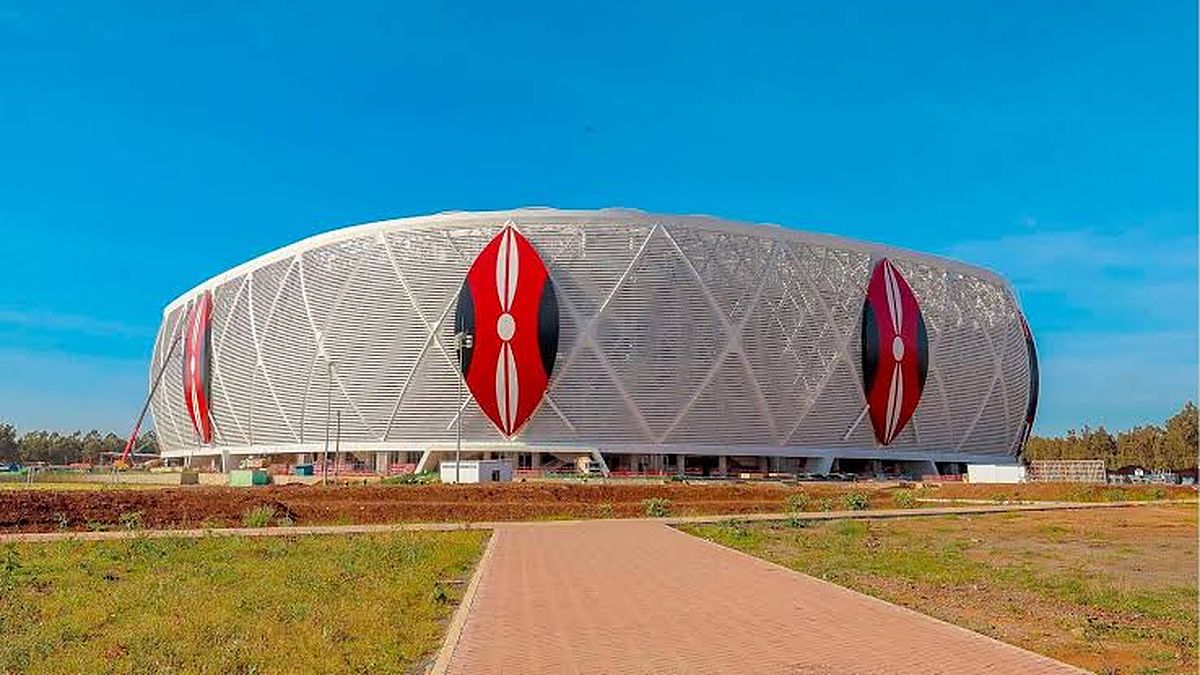
Construction timeline
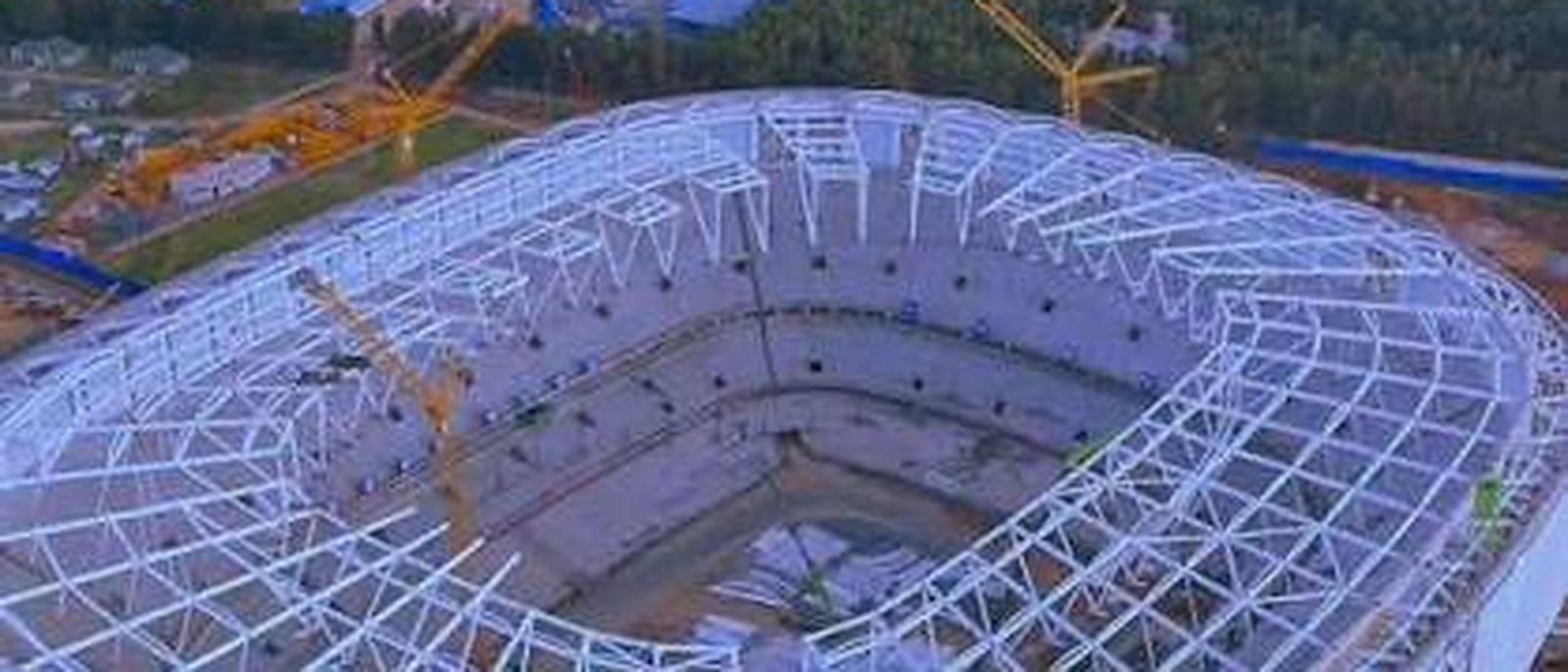
- Groundbreaking. President Ruto officiated at the Jamhuri Grounds, and China Road and Bridge Corporation began work.
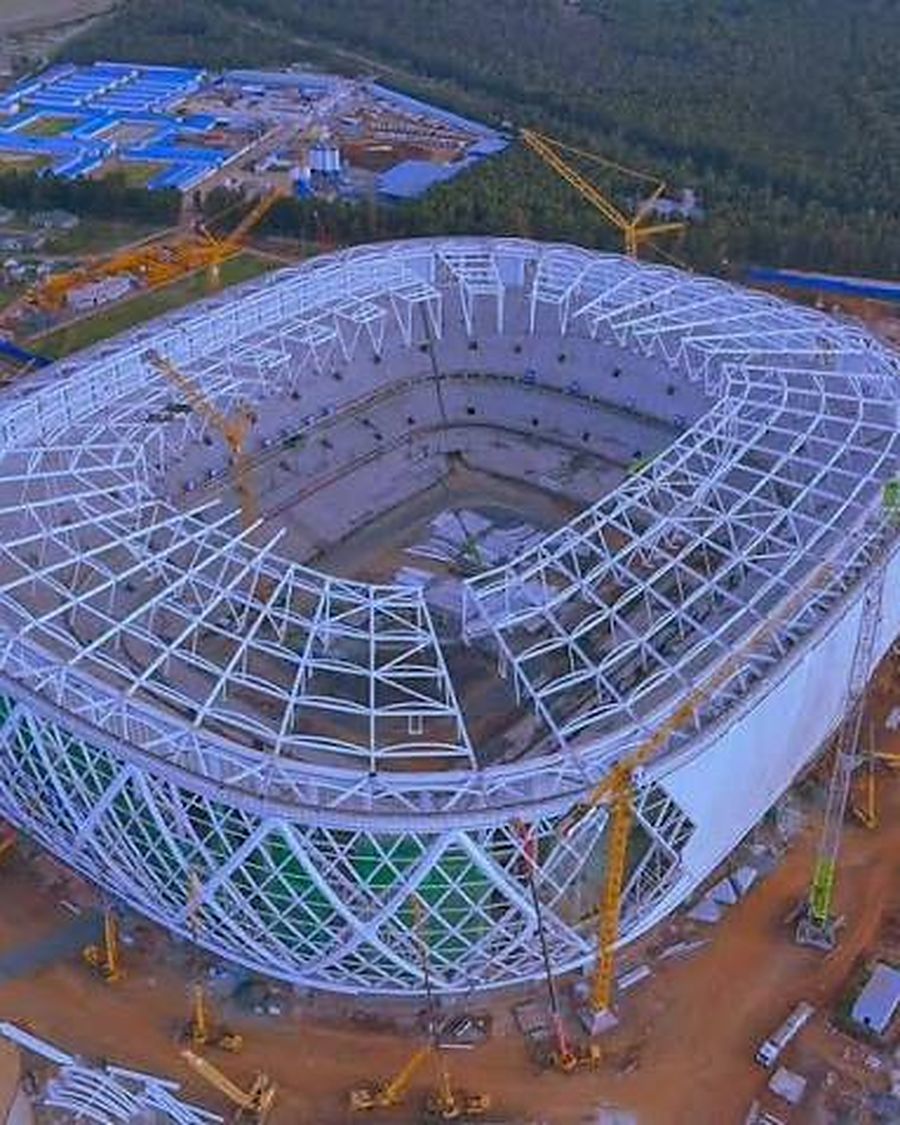
- Presidential inspection. President Ruto said he was satisfied with progress. About 3,300 workers were reported on site, around 2,000 on day shifts and 1,300 on nights.
- 45% complete. A People Daily report put progress at 45%.
- More than 80% complete. Defence PS Patrick Mariru said the bulk of the work was done.
- CAF report and delay. CAF said Kenyan venues had yet to meet its standards, and a Senate inspection reported completion delayed to mid-2026.
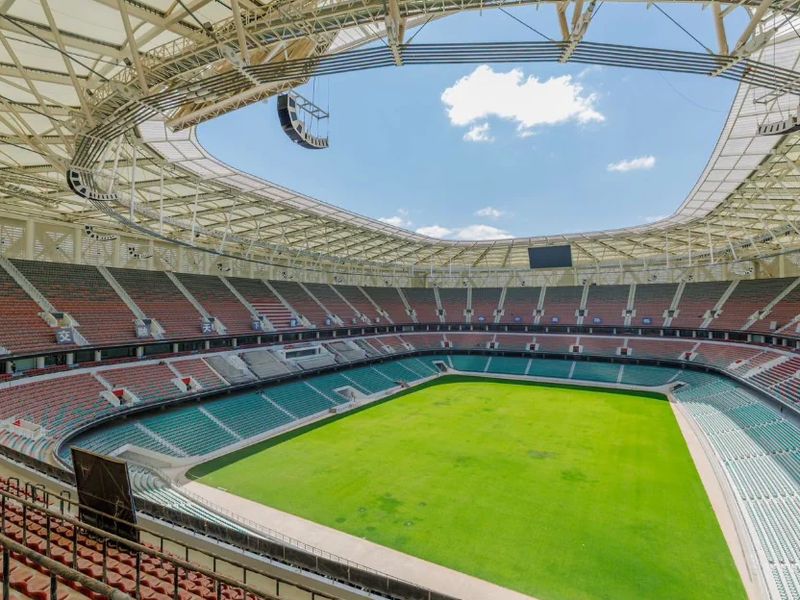
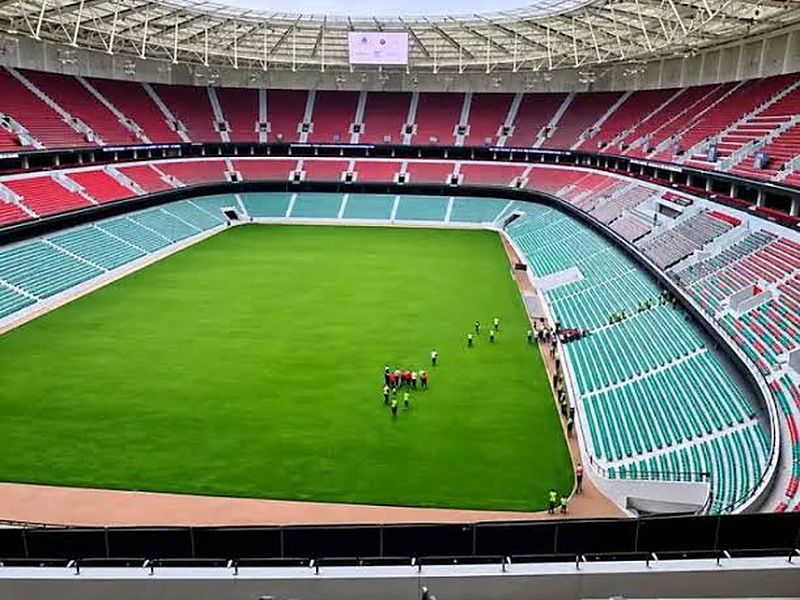
- Pitch milestone. Sports Kenya reported that the planted Bermuda grass had germinated.
- 92 to 94% complete. Reports put the main stadium at 92% and then above 94%. Sixty of 91 turnstiles were finished, and two training facilities were about 50% and 40% complete. The Sports CS said the stadium could be ready in November.
- CAF inspection. CAF inspected the venue, and Al Jazeera reported that CAF President Motsepe praised progress.
- 94% complete; opening date announced. The Treasury PS announced 94% completion, and the President said the official opening would be 5 January 2027.
Cost and financing
| Initial Treasury approval | KSh 35 billion |
|---|---|
| Reported later cost | About KSh 45.85 billion (roughly US$418 million per Wikipedia). A Daily Nation analysis highlighted a Sh10bn tax bill within the increase |
| Bond | A KSh 44.79 billion infrastructure asset-backed security listed on the Nairobi Securities Exchange by Linzi Finco 003 Trust, a Liaison Group subsidiary |
| Structure | Public-private partnership; bond backed by the project’s future revenues |
The gap between the approved and reported figures drew press scrutiny, including a Daily Nation analysis of the tax element. A fair reading is that the project’s total cost grew, and that the funding structure depends on future revenue, which makes the stadium’s long-term programming important.
Contractors and stakeholders
- Contractor: China Road and Bridge Corporation (CRBC), a subsidiary of China Communications Construction Company.
- Supervision: the Kenya Defence Forces engineering department.
- Owner and operator: Government of Kenya; Sports Kenya.
- Financing: Linzi Finco 003 Trust (Liaison Group).
- Tournament bodies: CAF and the AFCON 2027 Local Organising Committee, chaired by Nicholas Musonye.
The contract price itself was not disclosed in early reporting.
Economic significance and employment
Workforce reports put about 3,300 people on site at one point in 2025. After opening, stadiums of this type typically create ongoing work in operations, security, catering and event management, though we have no confirmed post-opening job figures. The wider economic case rests on AFCON visitors, sports tourism and regular events, and the project’s funding model leans on future revenue.
Impact on Kenya’s sports infrastructure
Talanta is the largest sports-infrastructure investment in Kenya’s history by one account and the first major new stadium since the 1980s. It also adds a football-and-rugby-only venue to a national stock that previously relied on multi-purpose stadiums.
Future development
Remaining work reported includes finishing training facilities, completing turnstiles and external works, and completing CAF compliance. Beyond the stadium, the wider Talanta Sports City concept includes training grounds and an athletics field. We have no confirmed plans for further phases.
Reading the progress numbers
Completion percentages quoted in the press range from 45% (May 2025) through 66% and 80% to 92% and 94% (August and November 2026). They come from different officials and outlets, measured on different dates, and “percentage complete” can mean different things: share of the budget spent, share of the work programme finished, or an overall estimate. The last few percentage points in any large building project often involve finishing, testing and compliance work, which can take a surprising amount of time.
That is one reason the opening was first spoken of as late 2025, then early 2026, then mid-2026, then November 2026, and now 5 January 2027. This guide records each reported date with its source rather than treating any single one as final.
What typically happens before opening
Before a stadium of this size can host a full crowd, authorities generally need to complete final construction, test lighting, scoreboards, broadcasting and safety systems, receive compliance sign-off, and run trial events with limited attendance. The reported statements on CAF assessments and spectator-management upgrades suggest that part of this process is under way. What has not been published is a detailed commissioning schedule, so this guide cannot say when each step will finish.
Sources and dates
Compiled from Wikipedia, The Star, Daily Nation, People Daily, Citizen Digital, K24 Digital, EWN and Al Jazeera; checked 14 November 2026. Percentages vary between reports because they were taken at different dates.